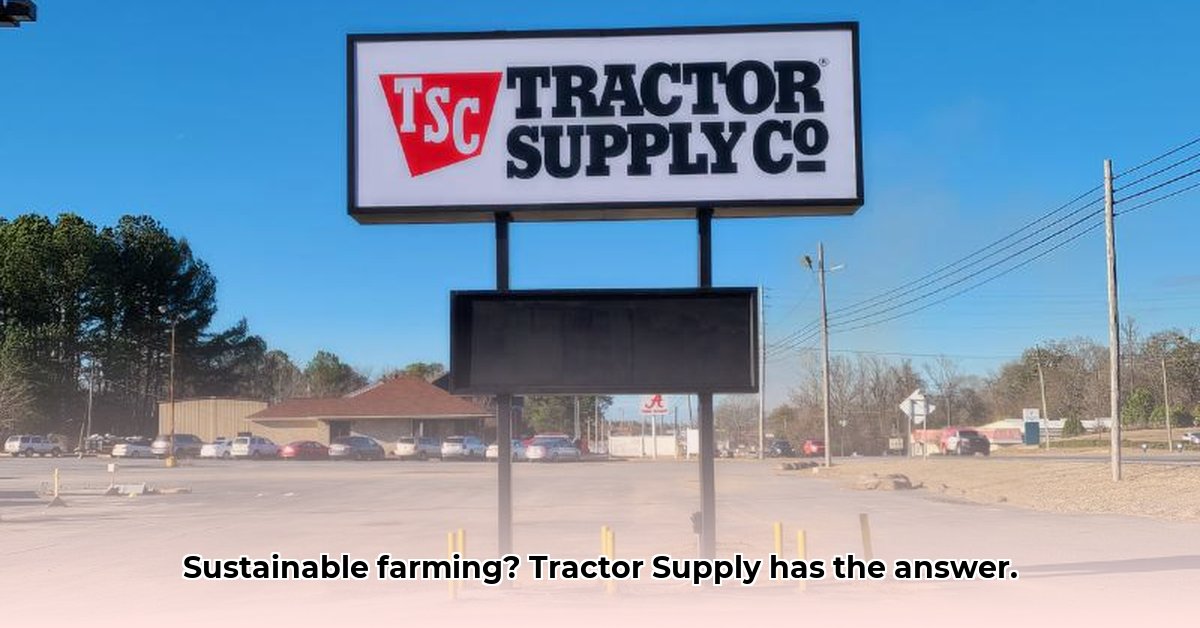
Tractor Supply Company (TSC) in Childersburg, Alabama, plays a significant role in the local agricultural landscape, providing farmers and gardeners with a wide array of supplies. However, the extent to which TSC Childersburg actively promotes sustainable farming practices requires closer examination. For examples of similar sustainability initiatives, see this case study. This case study analyzes TSC's current offerings, identifies areas for improvement, and proposes actionable steps to enhance its contribution to sustainable agriculture in the Childersburg community.
Assessing TSC Childersburg's Sustainability Efforts
TSC Childersburg's impact on sustainable farming is a complex issue, hindered by a lack of publicly available data on product sourcing and environmental impact. While the store stocks items useful for sustainable agriculture (organic fertilizers, certain seeds, etc.), a clear and consistent message about its sustainability commitment is absent. This lack of transparency represents a significant missed opportunity to connect with the growing number of environmentally conscious consumers. To improve, TSC needs a detailed roadmap.
Evidence Spectrum:
- Strong Evidence: TSC's existing customer base provides a direct path to understanding local farmers' needs and preferences regarding sustainable farming.
- Moderate Evidence: TSC's product catalog includes items suitable for sustainable agriculture, though the degree of their sustainability (e.g., organic certification, sustainable sourcing) varies.
- Weak Evidence: Limited publicly available information exists regarding TSC's overall environmental impact, supply chain practices, and specific sustainability goals. This hinders a comprehensive assessment.
Actionable Steps: A Collaborative Approach to Sustainability
Transforming TSC Childersburg into a leader in promoting sustainable agriculture requires a multi-pronged approach involving the store's management, marketing team, local farmers, and its supply chain partners.
Short-Term Actions (Within 1 Year):
Targeted Customer Surveys (TSC Management): Conduct comprehensive surveys of existing customers to assess their sustainable farming practices, needs, and preferences. Understanding local priorities will directly inform product offerings and marketing strategies. (Efficacy Goal: 90% customer response rate).
Marketing Campaign (TSC Marketing): Launch a targeted marketing campaign showcasing TSC's existing sustainable product offerings. Highlight success stories of local farmers utilizing these products for environmentally friendly farming. (Efficacy Goal: 25% increase in sustainable product sales).
Community Engagement (TSC & Community Partners): Host workshops and informational events focused on sustainable agricultural practices, involving local experts and organizations. Foster collaboration and community building around sustainable farming initiatives. (Efficacy Goal: 100+ attendees across three workshops).
Long-Term Strategies (3-5 Years):
Transparency Report (TSC Management): Publish an annual sustainability report detailing product sourcing, environmental footprint, and future goals. Transparency will build customer trust and attract environmentally conscious consumers. (Efficacy Goal: 100% transparency across key supply chain metrics)
Strategic Partnerships (TSC Management): Forge alliances with organizations and influencers in the sustainable agriculture field to enhance TSC's credibility and reach. (Efficacy Goal: 3-5 key partnerships established)
Expanded Product Line (TSC Procurement): Expand the range of products specifically designed for sustainable farming, including organic seeds, compost, water-efficient irrigation systems, and reduced-plastic packaging. (Efficacy Goal: 15% increase in sustainable product selection).
Supply Chain Sustainability (TSC Procurement): Implement stricter standards for suppliers, prioritizing those committed to ethical and sustainable practices throughout their operations, reducing the reliance on single-use plastics. (Efficacy Goal: 75% reduction in single-use plastics in the supply chain)
Conclusion: Cultivating a Sustainable Future in Childersburg
Tractor Supply Childersburg has the potential to be a major catalyst for sustainable agriculture in the region. By embracing transparency, engaging with the community, and promoting sustainable sourcing and practices across its operations, TSC can significantly benefit both the environment and its business. The journey requires dedication and collaboration, but the long-term rewards for the community, the environment, and TSC itself are substantial. This proactive approach will not only bolster its reputation but also strengthen its position as a cornerstone of the Childersburg community.